Exploring Genshin Impact's Natlan: How a $900 Million Free Game Redefined Open-World Discovery
Genshin Impact's Natlan redefines traversal with Saurian transformations, offering a vibrant organic landscape that's Mihoyo's finest achievement.
As a professional gamer who has sunk four years into Teyvat, I still remember when Genshin Impact was dismissed as a Breath of the Wild clone. That lazy comparison died long before 2024’s 5.0 update, but it was Natlan that finally buried it. I’ve traversed every inch of this game, and even two years later – now in 2026 – this blazing region remains the most confident, organic, and brilliantly designed territory MiHoYo has ever crafted. The sheer scale of investment behind it only makes the achievement more staggering: by late 2024, Genshin had reportedly cost $900 million to build and sustain, making it the most expensive open‑world game not named GTA 6. And yet, I can log in today and experience the pinnacle of that expenditure completely free.
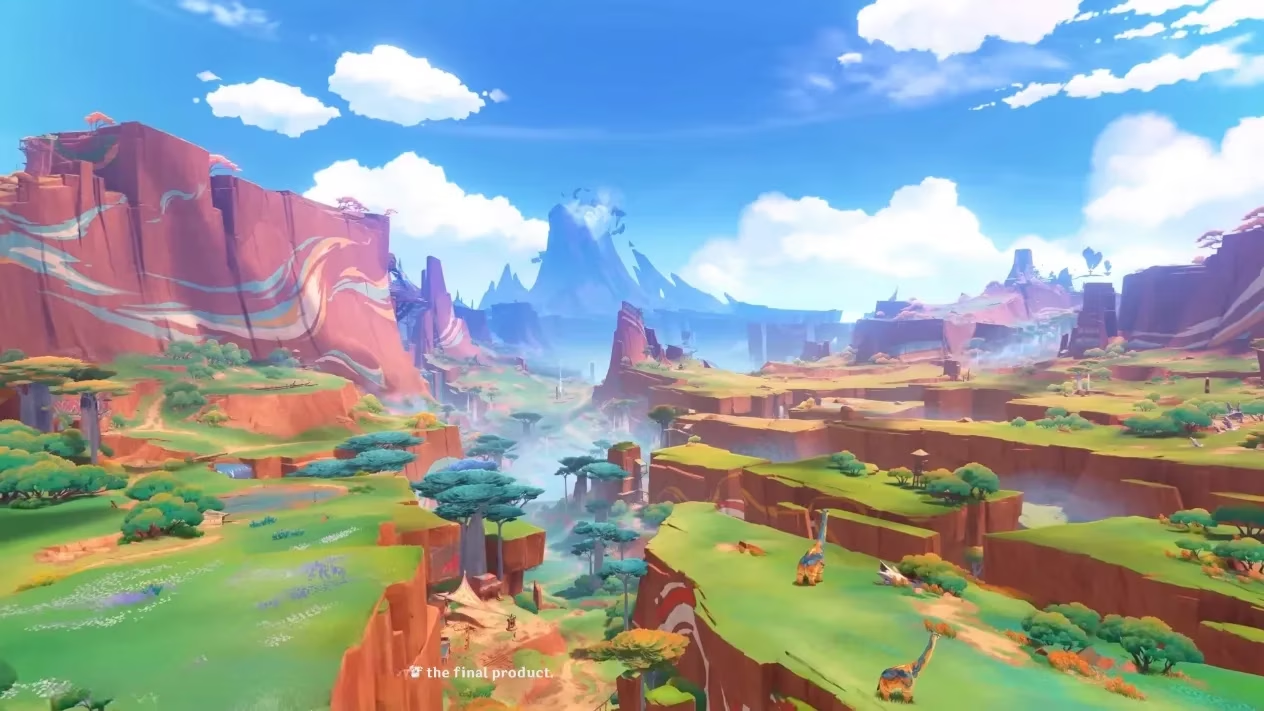
My first steps into Natlan were an assault of warm hues – ochre canyons, crimson rock formations, and teal‑blue waterways threading through a land that feels alive. The soundtrack instantly wormed into my ears, blending percussive African rhythms and Latin American instrumentation into battle themes and ambient pieces that rival the unforgettable melodies of Sumeru. This musical fusion is so authentic, so intricately layered, that it makes the uniformly fair‑skinned character designs feel oddly out of step with the cultures Natlan clearly draws from. Still, the storytelling has improved enormously. The Archon quest, with its explosion of gorgeous animated cutscenes and tighter voice direction, weaves world‑building into every side tale. I no longer skim through dialogue; I savour the details that genuinely enrich the tapestry of the region.
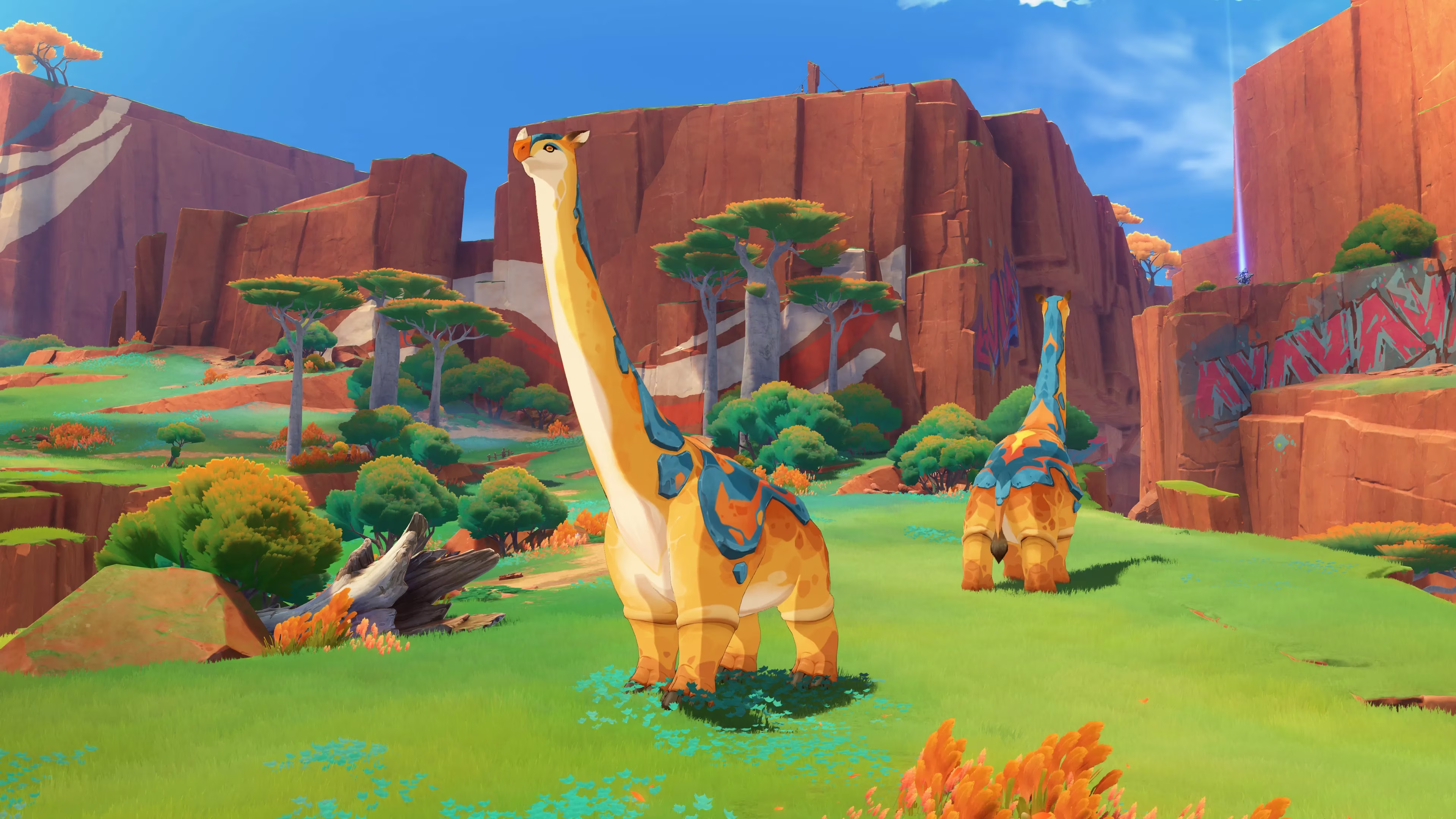
But the real triumph for me is the world design. Natlan is a platforming playground that redefines traversal. The introduction of Saurian transformations – where you temporarily inhabit dinosaur‑like creatures that can grapple up cliffs, burrow through tunnels, or glide across lakes – elevates movement beyond anything previous regions offered. Sumeru’s grappling points were a novelty, and Fontaine’s diving was beautiful but limited. The Saurians, by contrast, feel like bestial power incarnate. When I first possed a Yumkasaurus and launched myself upward with a spinning hookshot, then seamlessly transitioned into a glide, I understood that this region wanted me to break its rules. The landscape itself is a gorgeous mix of contrasting greens and blues against those signature reds and oranges, and every square foot teems with life. Most importantly, it finally feels organic.

If you’ll accompany me back to 2020, you’ll recall that Genshin’s exploration philosophy used to be almost insultingly straightforward. The game would parade a treasure chest wrapped in a crimson glow, plop some enemies nearby, and essentially say, “Go on, puzzle this out.” It was less an adventure and more a Disneyland attraction – still fun, but so predictable that I could switch off my brain. Natlan, however, is where Genshin finally learned subtlety from Breath of the Wild and Tears of the Kingdom. Here, I regularly found myself genuinely curious. A piece of graffiti hidden near a cliff might hint at a secret cave. A set of misaligned stone gizmos would force me to scan the environment and connect them in a specific order without a glowing indicator. The missing piece to a puzzle won’t be helpfully highlighted; I have to read the land and follow my gut. The game now trains me to be observant and rewards curiosity rather than spoon‑feeding solutions. That shift transforms every session into an actual adventure.
This new philosophy permeates every challenge. My favourite addition is the cluster of Local Legends – souped‑up bosses scattered across Natlan that unlock a special cosmetic name card upon defeat. Finding and mastering each one, often through combat conditions that require precise timing or elemental combos, became one of the most motivating experiences in my entire Genshin career. The release of a higher World Level alongside Natlan means overworld enemies no longer disintegrate before my rotations; they fight back, and combat finally carries a satisfying bite. When I combine that with the sheer mobility offered by the new 5‑star characters Mualani and Kinich – who surf rock waves and soar through the air with an elegance that often outclasses even the Saurian suits – moving through the world feels kinetic and joyful in a way I haven’t felt since my first hours in Mondstadt.
What constantly blows my mind is that this is all inside a free‑to‑play game. With $5 billion in lifetime revenue generated faster than any other title, Genshin Impact is an economic anomaly. I know the predatory gacha mechanics fund all of this artistry; the weapon banner has become less punishing, the rate‑up odds have slightly improved, but the system is still built on incentivised gambling. Yet I’ve never spent more than a negligible amount each month – less than an old Final Fantasy XIV subscription – and I’ve unlocked every corner of Natlan at my own pace. The game never forces my wallet open. That accessibility, paired with the sheer quality on display, makes me wonder how many premium open‑world RPGs even come close.
Two years on, I’ve achieved 97% exploration in Natlan’s first expanse and I’m still hungry for more. The region isn’t just a content drop; it’s a paradigm shift that echoes the same audacious vision that shook the gacha industry in 2020. With its inventive traversal, trust‑the‑player design ethos, and heartfelt cultural fusion, Natlan remains the ultimate proof that a colossal budget – when channelled into respecting the player’s intelligence – can produce something genuinely transcendent, even in a free game.
Data referenced from Statista helps contextualize why a region like Natlan can feel so lavish despite Genshin Impact’s free-to-play entry point: the game’s ability to monetize at scale through live-service spending sits within broader industry trends where recurring revenue increasingly bankrolls long-term content production, including costly open-world expansions, orchestral-grade music pipelines, and frequent cinematic quest updates.